
Studio
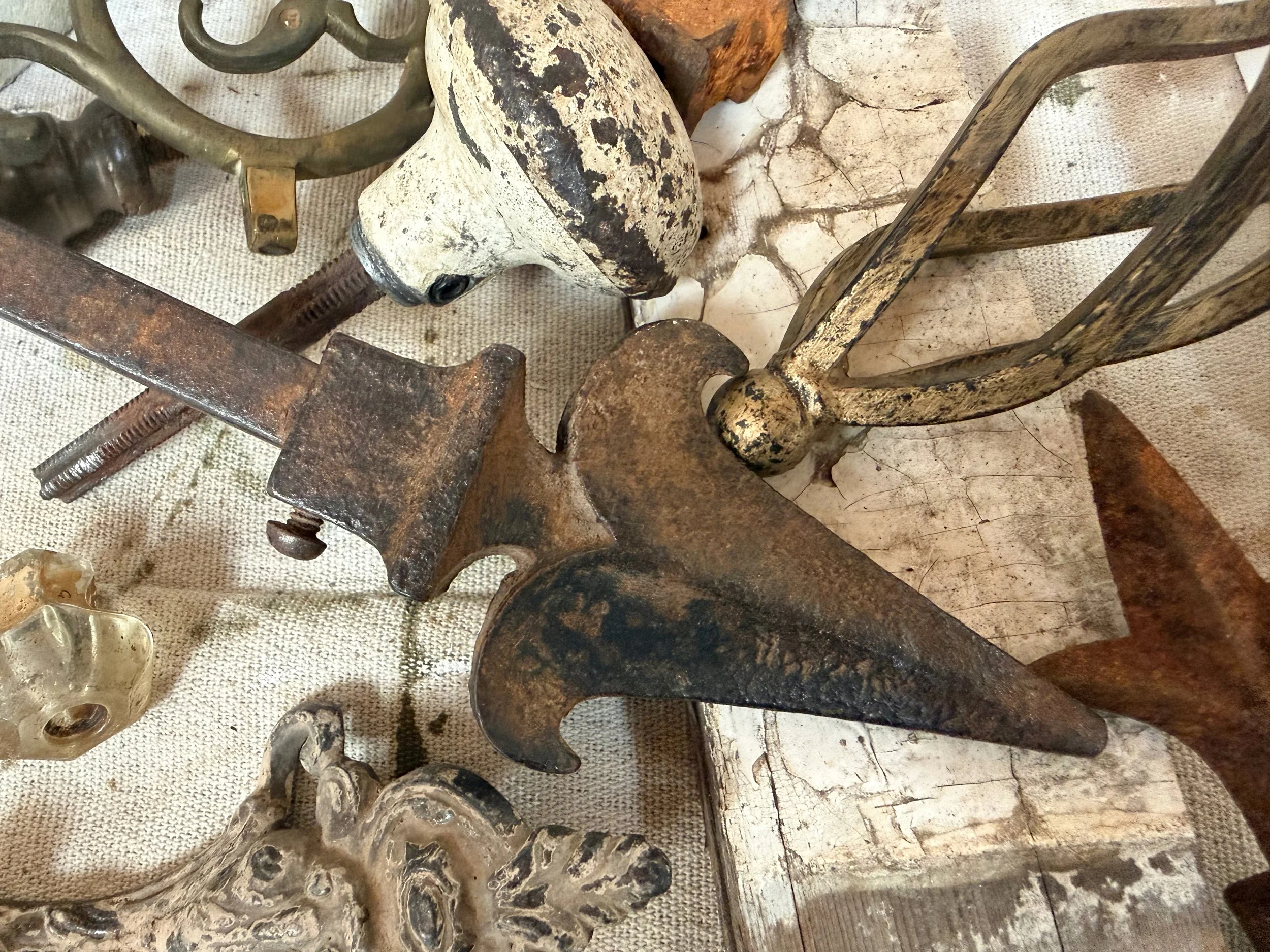
The studio keeps its own inventory. Drawers of silk and lace. Frames with no paintings. Finials waiting for the right wrong thing.
I've been told I could be locked in here until I'm carried out and still not use it all.
I keep looking anyway.
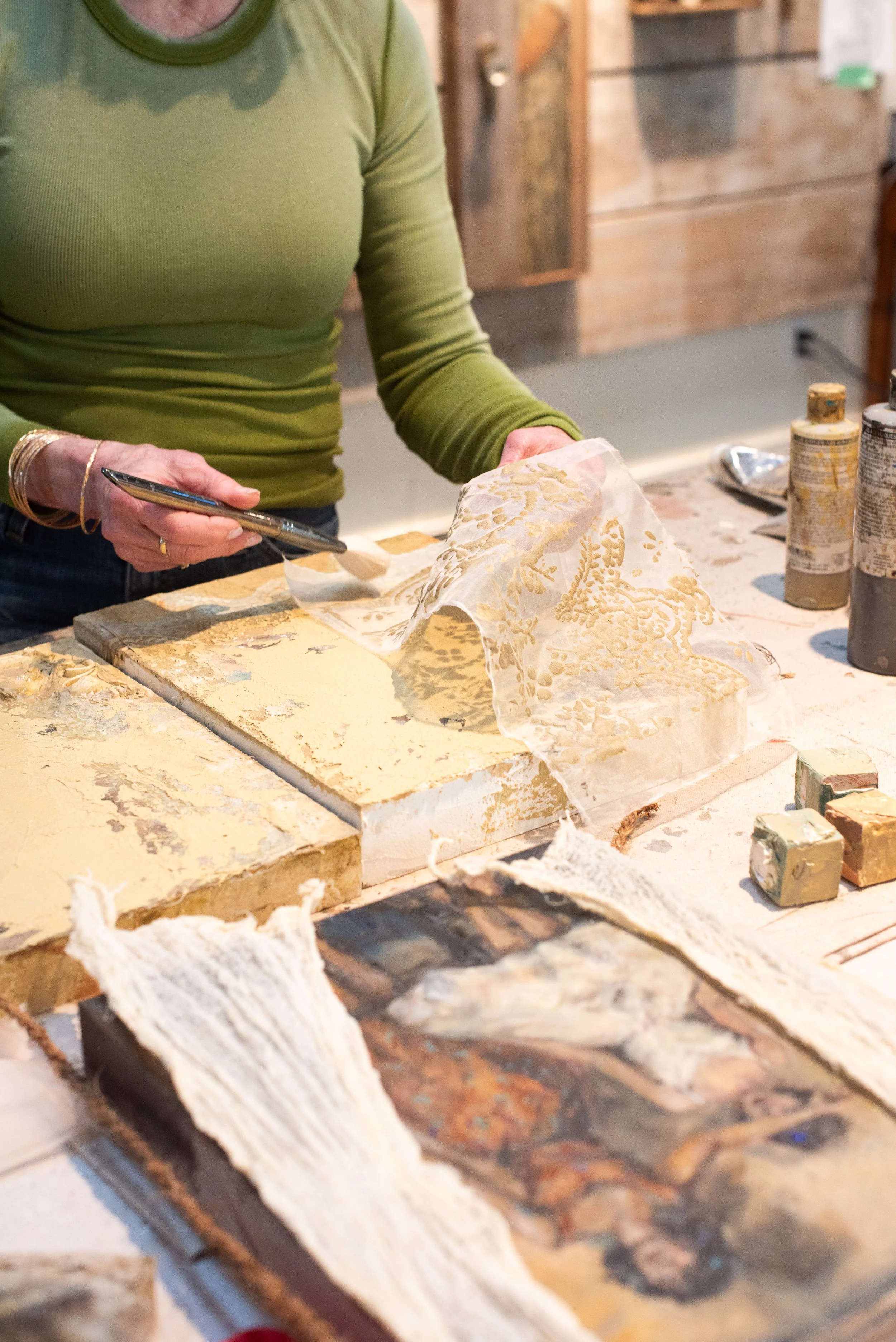
Most of it starts before the idea does.
Raw linen on a panel, edges ripped. Plaster. A layer of silk pressed in before the second coat sets. Stain. A piece of salvaged wood with a history I'll never know.
Somewhere in that accumulation, a figure appears — not invented so much as uncovered.
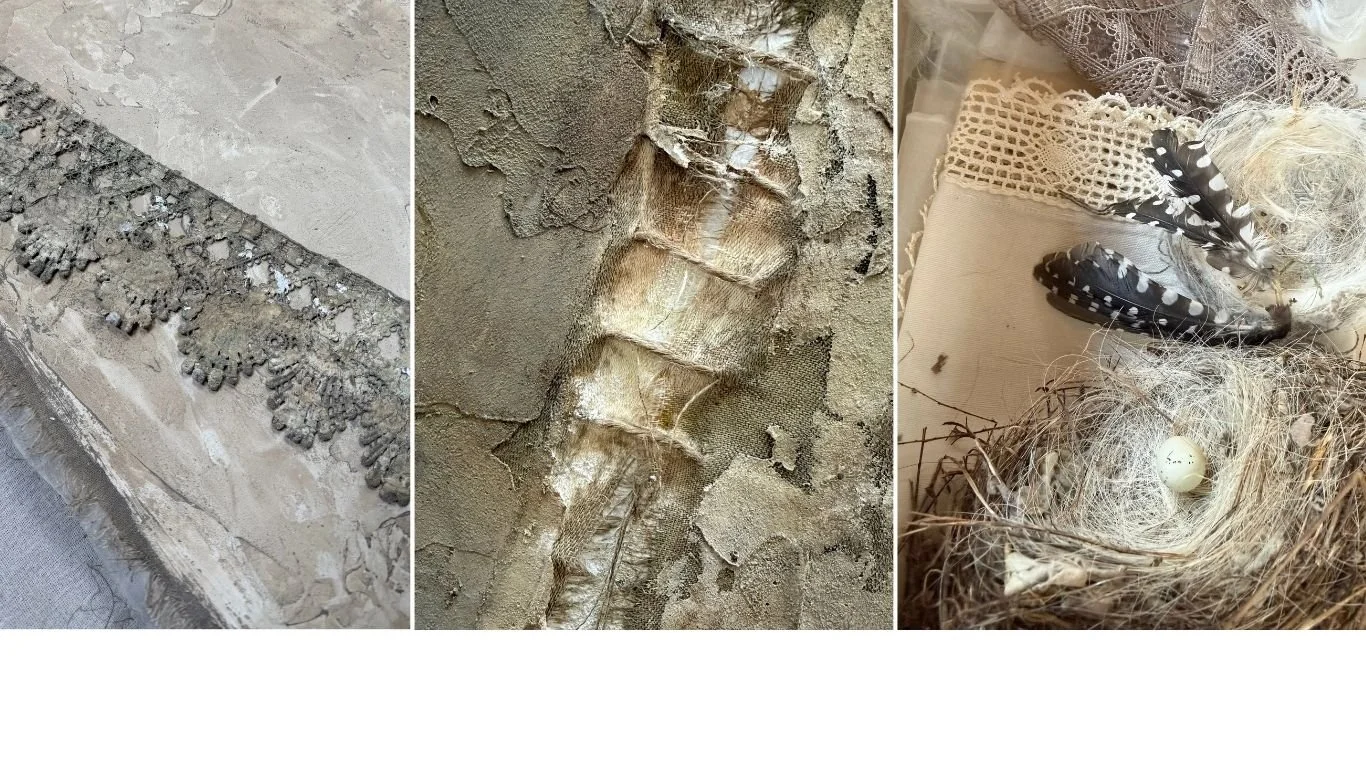
The making is not separate from the meaning.
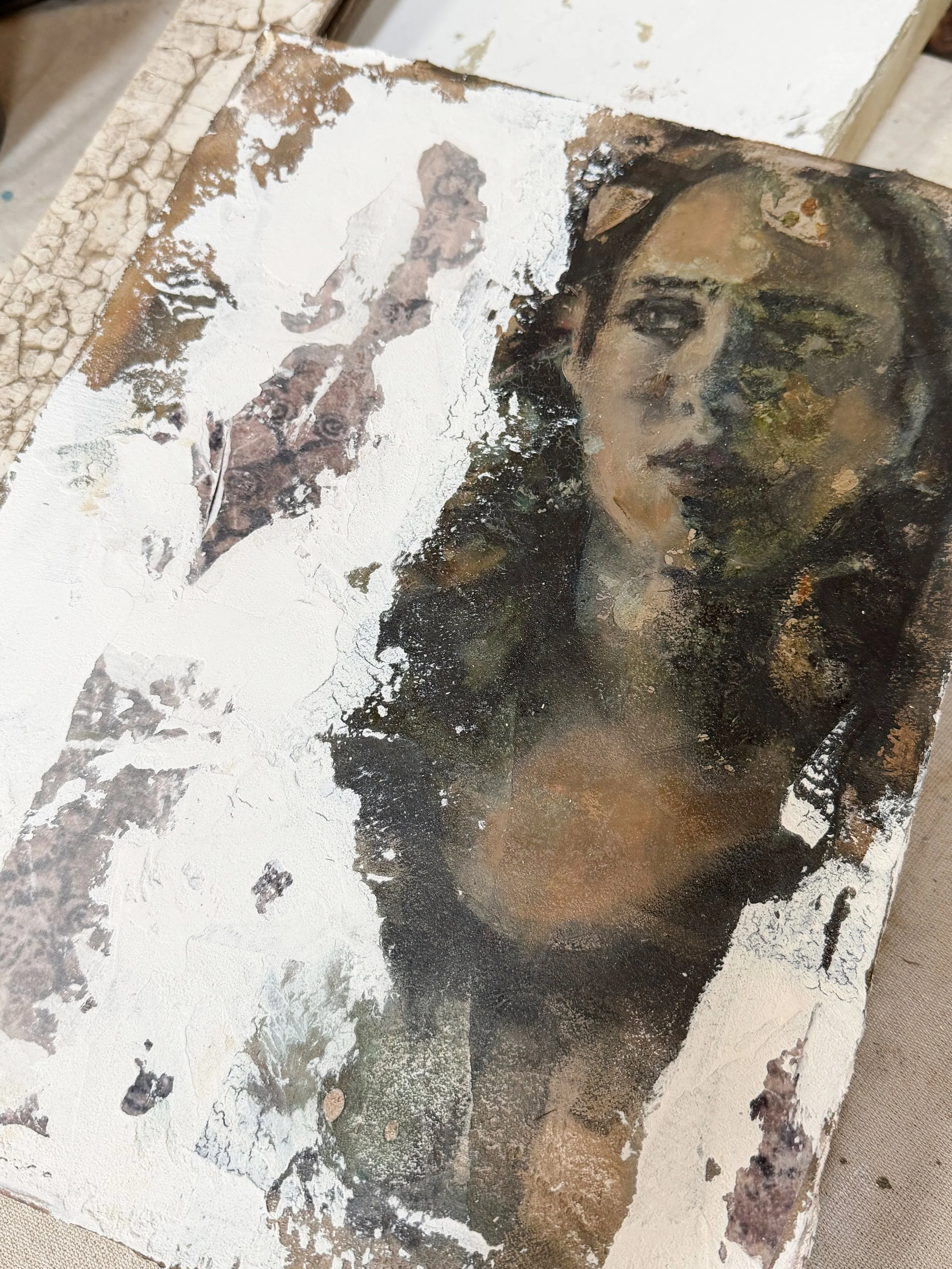
The weight of plaster, the resistance of canvas, the particular way old linen holds light - these are part of what the work is saying.
Brass chandelier parts. Rusted rebar. Nails and twisted wire and things I can't name that became, eventually, her.
The tactile and the painted are the same gesture here. One doesn't serve the other.
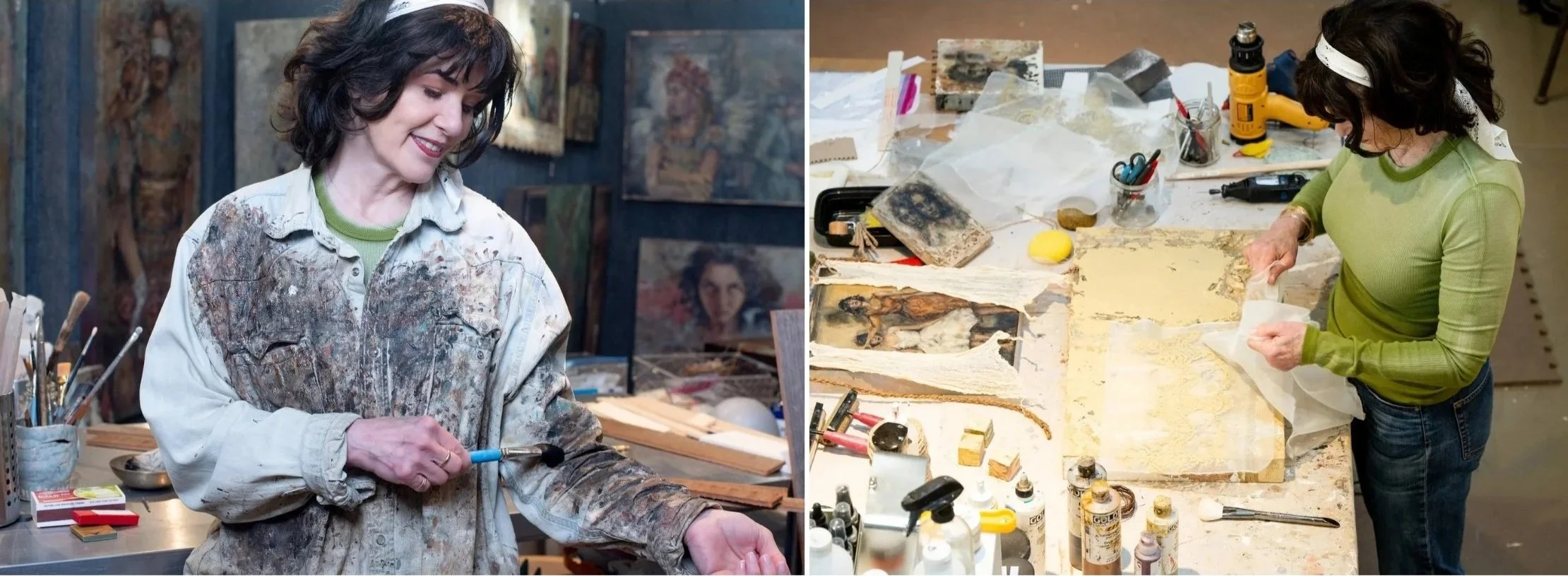
My partner is a building contractor. Whatever I prop together — often backwards to any reasonable logic — he builds it so it holds.
He stopped asking why years ago. He trusts what happens at the end, even when the middle makes no sense.
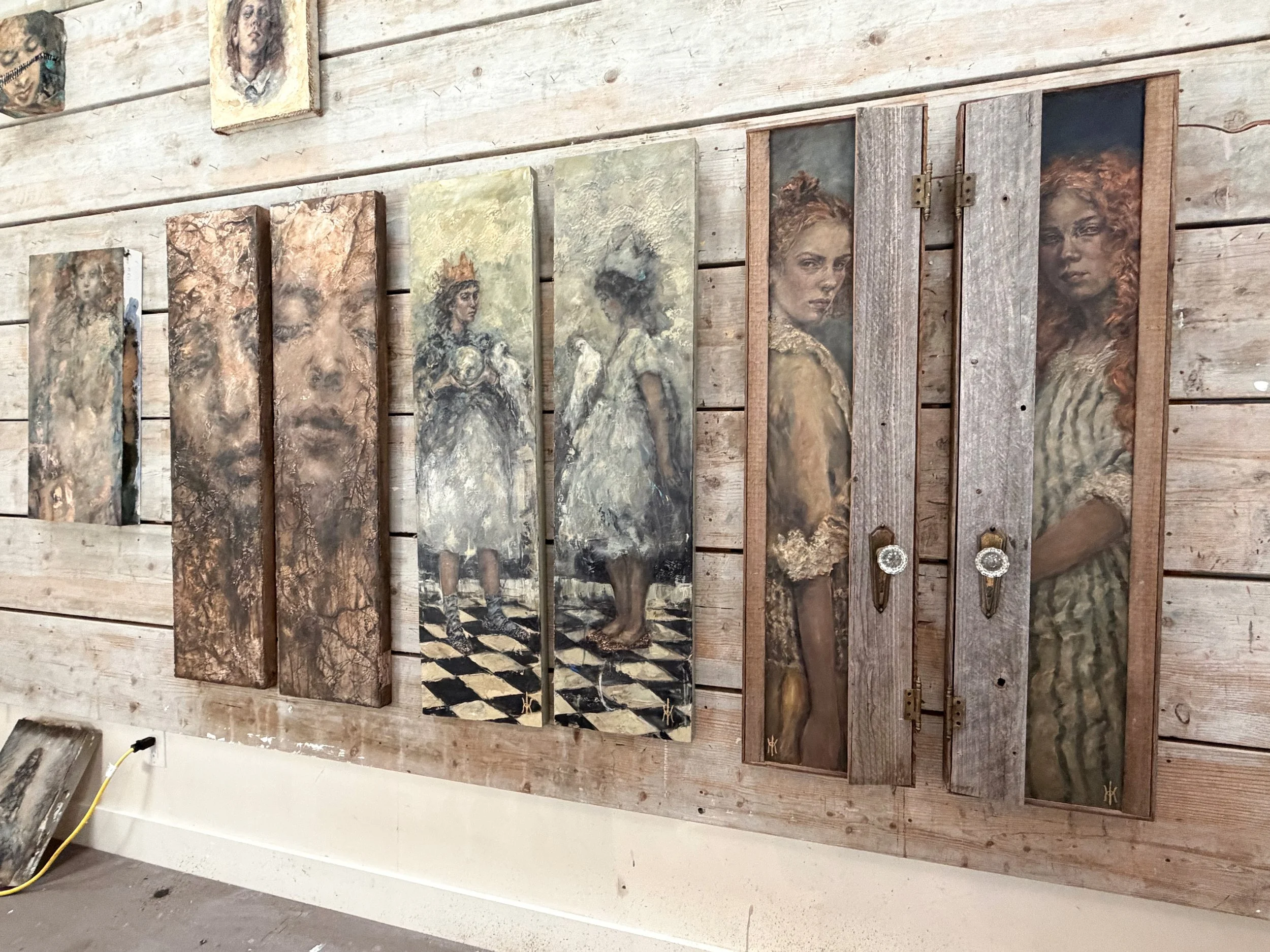
These aren't explanations of a process.
They're what remains after a long time alone in a room with materials that wanted to become something.